
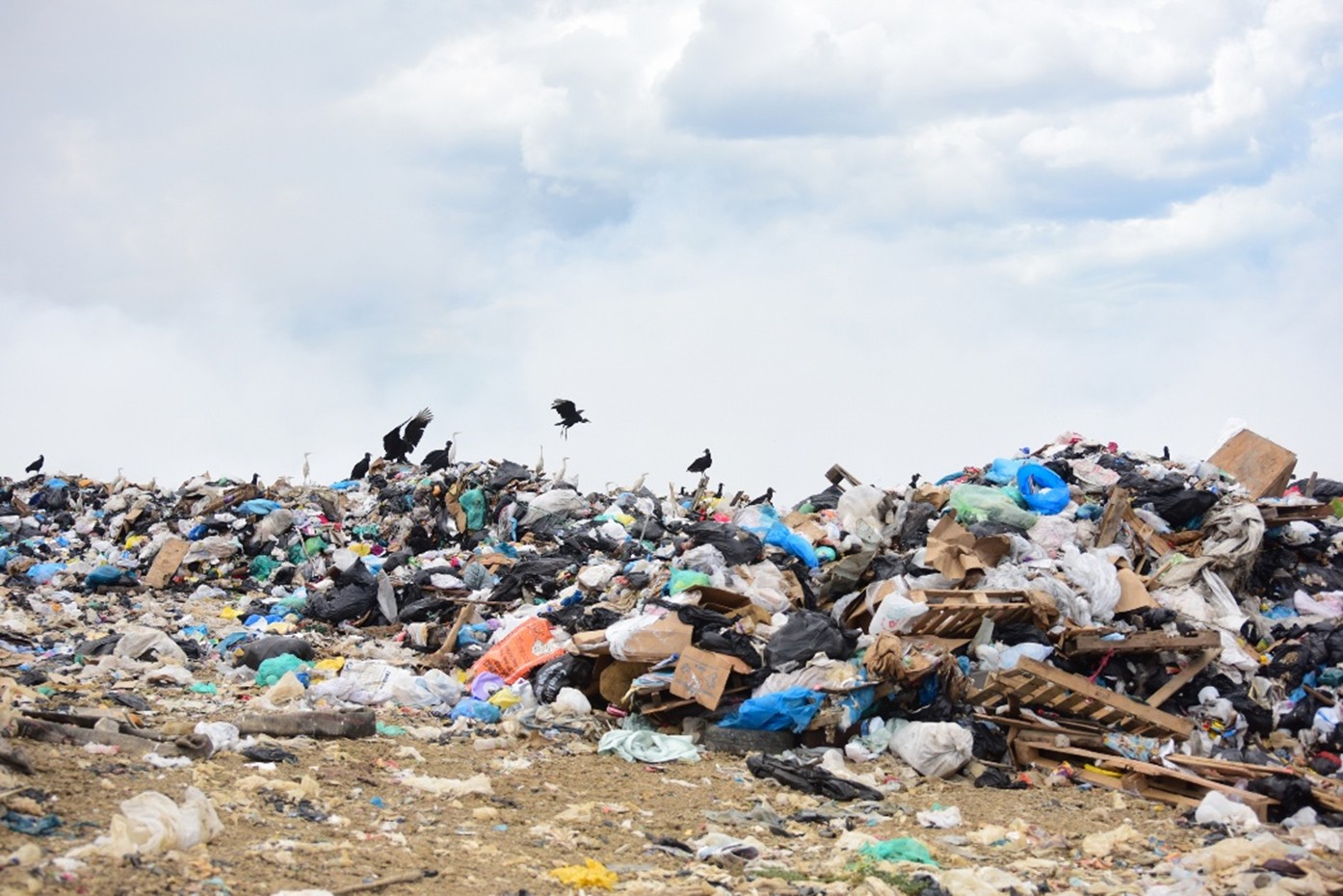
Image of the Forres Park Landfill, Trinidad and Tobago. Source: The Trinidad Express Newspaper (https://trinidadexpress.com/news/local/the-beetham-landfill-is-running-out-of-space/article_4582b044-7ad4-11e8-acb4-0b6db7abc6b9.html)
|
50% of waste in the Latin America and Caribbean region (LAC) classified as organic (UNEP, 2018) |
In today’s society, most people view waste as worthless, something to be discarded and forgotten. Once it leaves our homes, it is considered someone else’s problem, rarely prompting reflection on its environmental or social impact. This mindset, shaped by cultural norms and gaps in education and infrastructure, has resulted in poor behaviours and a disconnect from the consequences of consumption.
While efforts to improve waste management exist, global attention remains fixated on plastics, glass, and metals. These materials dominate pollution concerns, recycling targets and circular economy frameworks. The circular economy, as described by the United Nations, is a sustainable economic model that aims to keep products and materials in use for as long as possible through design for reuse, remanufacturing, recycling, and recovery. Unlike plastics and others, biowaste management continues to be sidelined, despite its significant environmental footprint and high potential to create wealth.
What is Biowaste?
Biowaste is any waste derived from plant and animal sources. This includes food scraps, kitchen waste, yard waste, and farm and agro-processing residues. Once dumped in landfills, and left untreated, microorganisms ‘break down’ the biowaste through anaerobic decomposition, which releases methane gas, the number one contributor to the greenhouse gas effect in our atmosphere and its adverse resulting effects on environmental conditions.
Take Trinidad and Tobago’s 2024 waste management policy rollout: it sets ambitious recycling targets for inorganic materials through to 2034 but fails to mention organics, interchangeably referred to as biowaste. This omission is striking, given that 32% of all waste reaching landfills in the country is organic. This high proportion of biowaste is not exclusive to Trinidad and Tobago of course. In its 2018 ‘Waste Management Outlook for Latin America and the Caribbean’, the United Nations Environment Programme, Latin America and the Caribbean (LAC) Office reported that on average, 50% of waste in the LAC region is classified as organic.
Addressing this gap requires a definitive and long-term commitment to cultural and systemic change, one that redefines waste as a resource and embeds biowaste valorisation into our collective mindset. In an era where resilience, food security, and environmental health are top priorities, biowaste must be repositioned as a strategic resource and opportunity, not a liability or problem that is beyond fixing.
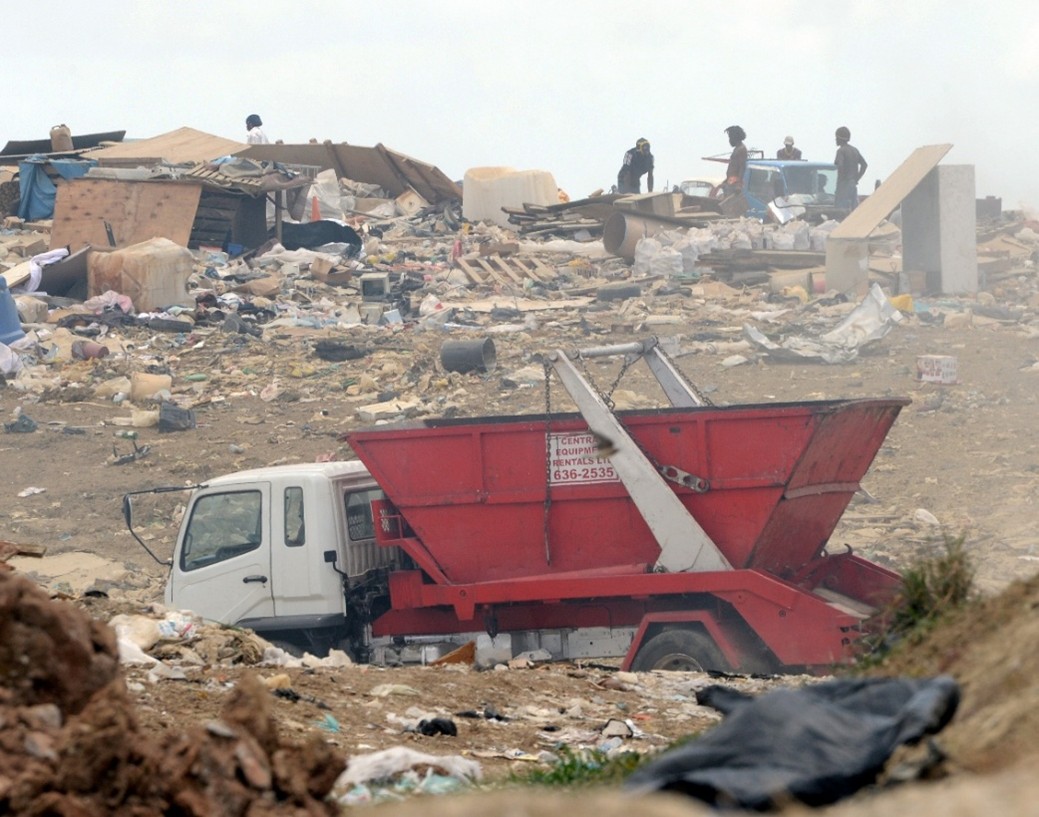
Forres Park Landfill, Trinidad and Tobago. Source: The Trinidad Express Newspaper
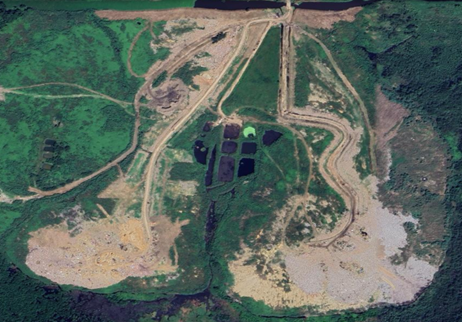
Aerial view of the Beetham Landfill in Trinidad and Tobago. Source: Google Earth.
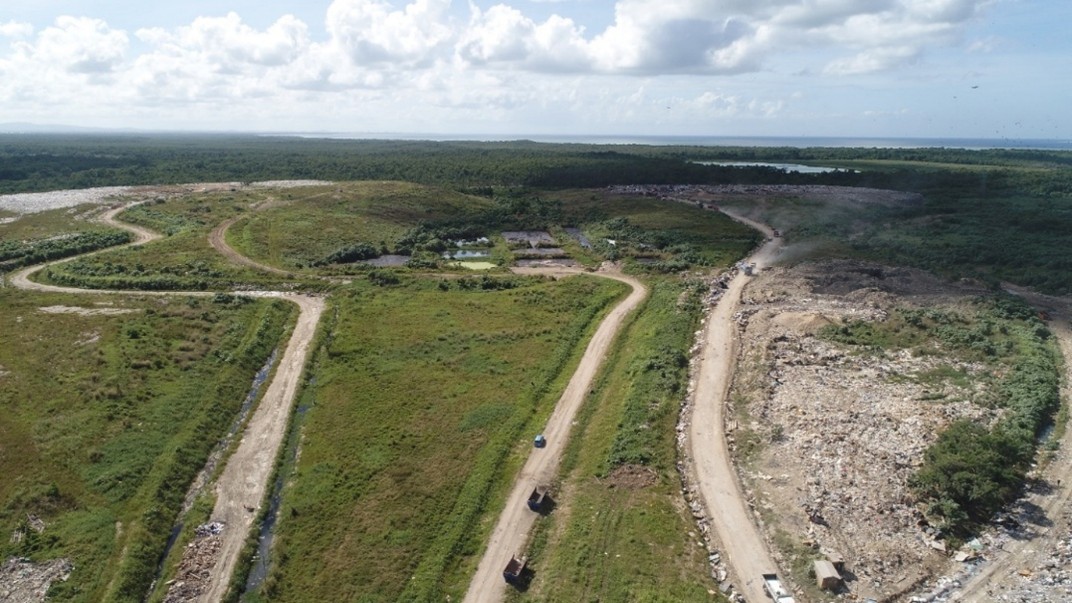
Aerial view of Beetham Landfill in Trinidad and Tobago. Source: Solid Waste Management Company Limited (SWMCOL).
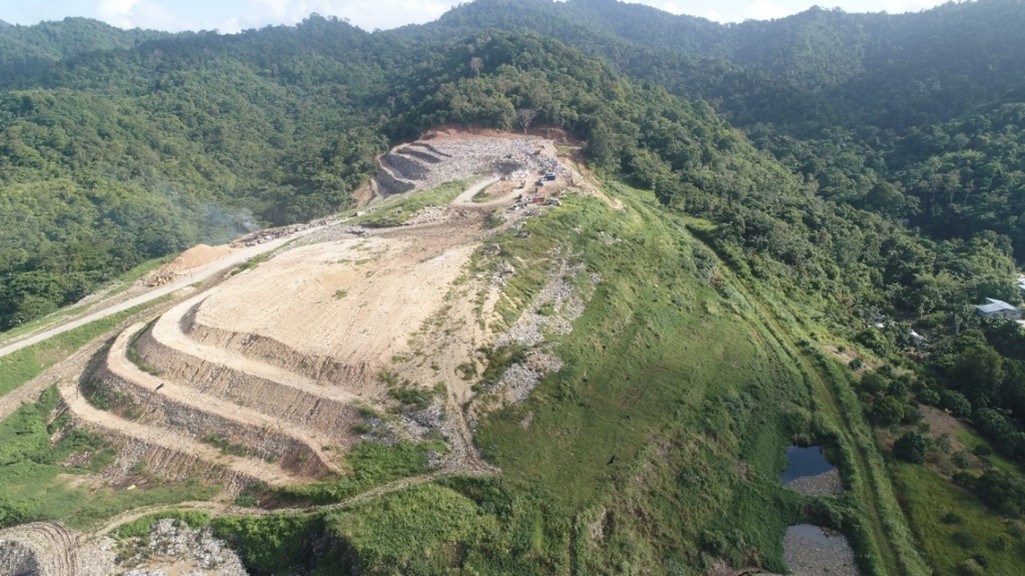
Aerial view of Guanapo Landfill in Trinidad and Tobago. Source: SWMCOL.
The islands have become “sinks” and final destinations for waste
Caribbean small island developing states (SIDS) face a range of structural and cultural constraints that continue to hinder progress in effective solid waste management. A major challenge is the lack of source segregation across policy, culture and everyday practice. This results in mixed waste streams that frustrate and increase costs of recovery, recycling, and valorisation. With limited land availability to expand sanitary landfills, open-air dumpsites have become more frequent, dotting landscapes across Caribbean countries. This worsens methane emissions, leachate contamination to groundwater resources and sensitive ecosystems, such as wetlands, and the proliferation of vector-borne diseases that affect both humans and animals.
Solid waste management is often overlooked as other competing national needs, such as poverty alleviation, education, public health and national security take priority. Consequently, many countries lack the foundational elements needed to advance sustainable waste management systems. These include clearly defined institutional roles and capacities, measurable targets for waste reduction and valorisation, standards for treatment and disposal by waste category and robust enforcement capacity and financing mechanisms. This systemic gap leaves SIDS vulnerable, not only environmentally, but economically and socially.
In some cases, islands have become “sinks”, final destinations for waste generated through importation of goods, tourism, and even ‘delivery’ via ocean currents. Tourism-dependent economies like Antigua face acute pressure, with the influx of waste amounting to 1,200 tonnes this year alone straining its’ already limited waste management system. While the cruise ships that arrive on the island follow international rules on waste and recycling, the local infrastructure is ill-equipped to process the volume sustainable. Seasonal surges in visitor numbers frequently overwhelm landfill capacity. These challenges are echoed across the region. In the Cayman Islands, for example, 130,000 tonnes of tourism-related waste were disposed of in 2024, prompting locals to nickname the overflowing landfill “Mount Trashmore”. The Caribbean situation was recently documented in a BBC article on ‘Sun, sea and trash: The Caribbean islands struggling with managing waste’ by Gemma Handy (September 2025).
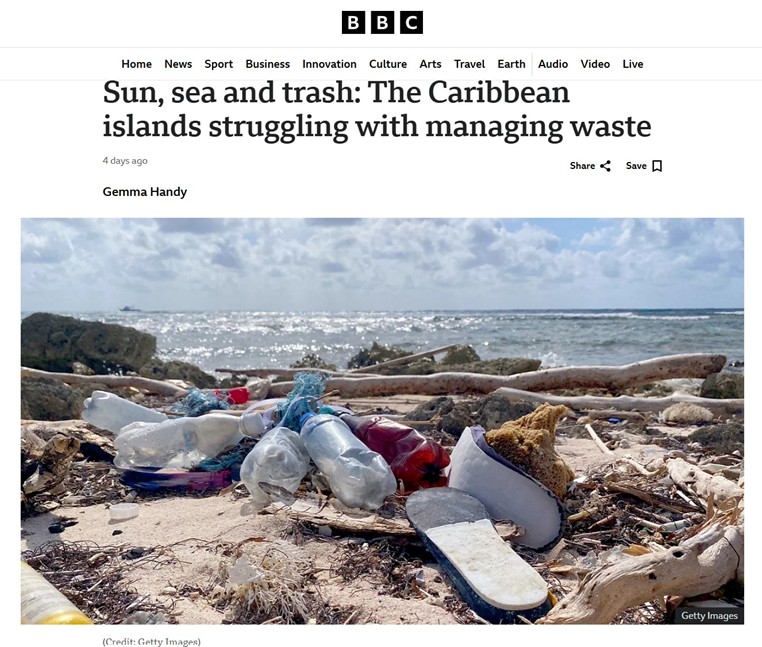
Source: https://www.bbc.com/worklife/article/20250923-the-caribbean-islands-struggling-with-managing-waste
Despite the current situation, there are opportunities to act. The answer may lie in reimagining what we call “waste.” Much of what ends up in landfills holds untapped value that can be harnessed through circular approaches. The focus on addressing single-use plastics and other inorganic materials may be infeasible for some if not most Caribbean SIDS. However, biowaste valorisation offers a practical and accessible entry point to multiple pathways for environmental, economic, and social benefits. There is value in biowaste management that can be realised through cultural and behavioural change toward sustainability and circular thinking.
Biowaste as a Resource: Pathways to Valorisation
Waste valorisation refers to the process of transforming waste materials into value-added products, resources, or energy. In place of disposing of waste materials, valorisation seeks to extract economic, environmental, or social value for the item, often through reuse, recycling, or upcycling. Examples of biowaste valorisation and their applications throughout the Caribbean region are provided below.
Composting
Composting is not new within Caribbean traditions and landscapes, however over the years the practice has been lost. Long before formal waste collection systems became widespread, rural communities routinely disposed of organic waste in gardens or around fruit trees, naturally enriching the soil. Today, composting remains a powerful tool for transforming biowaste into nutrient-rich compost and humus through aerobic decomposition. These materials serve as soil amendments and conditioners, helping to restore degraded lands and boost agricultural productivity.
The Trinidadian community of Cashew Gardens took it upon themselves to reduce waste at a landfill within their own neighbourhood. In 2020, 16 households collected 490kg of organic waste to produce 68kg of compost for use in a shared community garden. Household participation increased by 20% in 2021, and by the project’s end, landfill waste from the community dropped by 1%. Beyond waste diversion, Cashew Gardens built local capacity through training in soil science and composting, created 10 jobs, seeding a circular economy model that strengthened community resilience.
Replicating this initiative across other communities could significantly cut landfill load, landfill emissions and national waste processing costs. The added value includes enhanced soil water retention and filtration from waste converted into compost, improving soil health and offering co-benefits for flood mitigation and disaster risk reduction.
Home composting also offers one of the most accessible entry points into biowaste diversion. The tools are readily available, with compost tumblers found at hardware stores, or online. Local entrepreneurs are even marketing vermicompost systems, where earthworms do the heavy lifting. For those who prefer simplicity, pile composting requires no equipment at all, just a patch of soil and a commitment to reducing waste.
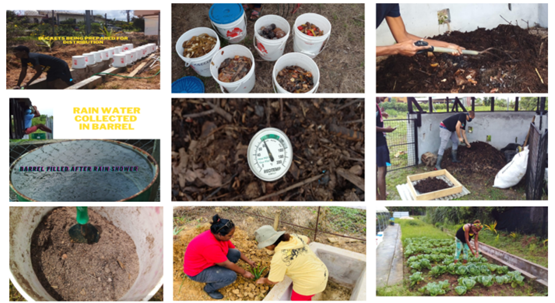
Volunteers and members of the Cashew Garden Community Compost initiative. Source: https://www.undp.org/sites/g/files/zskgke326/files/migration/tt/a3f3781f5b9b30740301782e29b3fd3f3db02a8aae60e2ed05a7e946257caa68.pdf
Animal Feed
Biowaste has long been used in agriculture, primarily as a ready food source for animals. This traditional practice has now been developed into a commercial activity, where raw or processed food waste is transformed into dry livestock feed, commonly for pigs, cattle, sheep, and fish. This is typically done by combining plant-based materials, such as grains, fruits, and vegetables, with yeast and natural enzymes found in pineapple and pawpaw. Results of these types of feed have been shown to enhance the growth performance and immunity of some carp species, offering a sustainable alternative to conventional aquafeeds.
Biowaste is also being transformed into protein-rich livestock feed through Black Solider Fly (BSF) rearing. Flies lay eggs in waste bins, and their larvae consume organic matter before being harvested as a nutrient-dense supplement, particularly for poultry and aquaculture. The larvae’s byproduct, known as frass, can also be used to enrich soils.
The Food and Agriculture Organisation (FAO) in collaboration with the University of the West Indies (UWI) has taken on an insect production project in Trinidad and Tobago, Barbados, Grenada, and Jamaica, to promote BSF as a viable solution for circular agriculture. Within this project, a UWI student found that just 300 grams of larvae can consume 12kg of biowaste in their life cycle. With its potential to reduce waste and generate income as an alternative animal feed supplement, BSF farming is emerging as a scalable and sustainable strategy for the region.
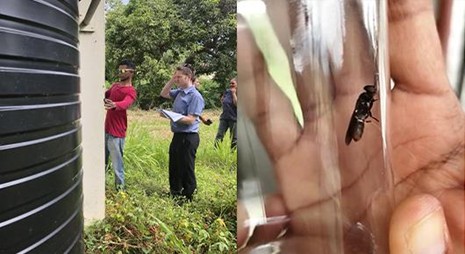
FAO’s insect bioreactor pilot plant facility in Trinidad and Tobago. Source: https://www.fao.org/americas/news/news-detail/Insect-production-for-animal-feed-in-the-Caribbean-is-a-step-closer-to-reality-/en
Biofuel Production
As global population and energy consumption continue to rise, the search for alternative energy sources has intensified. Within this search, biogas has emerged as a viable option. Produced through the anaerobic decomposition of organic matter, biogas can be used for cooking at the household level and scaled up for power generation in larger scale practices, often even used to fuel vehicles.
A compelling example of this can be found in Barbados, where a groundbreaking pilot project is demonstrating the power of biowaste to fuel a low-carbon future. A start up called Rum and Sargassum, in collaboration with UWI Cave Hill campus, is piloting four retrofitted vehicles running on biomethane, a value-added product derived from the fermentation of sargassum, spent sugarcane, wastewater from the rum industry, and enzymes found in sheep manure. This innovative blend transforms locally abundant organic waste into clean energy, reducing emissions from both landfill and vehicular use. More than a technical experiment, the project is a proof of concept for circular economy solutions that repurpose waste into economic and environmental assets. It directly supports Barbados’ ambitious goal of becoming a carbon-neutral island state by 2030, showcasing how small island nations can lead with ingenuity and resourcefulness.
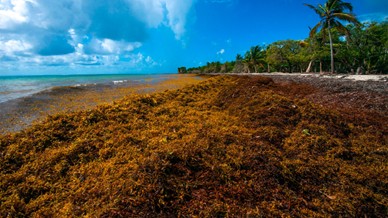
Sargassum seaweed inundating a Barbados beach. Source: Rum and Sargassum. Source: https://rumandsargassum.com/home/
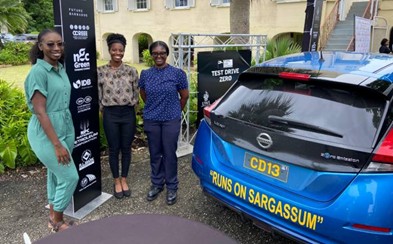
Barbados’ first vehicle powered by Renewable Natural Gas. Source: https://www.caribbeanaccelerator.org/rum-sargassum-unveils-first-vehicle-powered-by-renewable-natural-gas/
Bioplastics
Bioplastic production from food waste is another viable innovation to divert biowaste from landfills and create alternative bio-based plastics. Researchers have been experimenting with hydrolysis and fermentation techniques to transform organic waste into polymers with promising market potential. As an example, cellulose, starch, fatty acids, and proteins extracted from sugarcane molasses is synthesized into biopolymers to produce a range of value-added products like wound dressings and toothbrushes, and compost bags and biodegradable consumer bags.
Bioplastics offer clear environmental advantages: they are non-toxic, biocompatible, and derived from accessible and replenishing sources of organic matter, such as sugarcane byproducts and seaweed. Yet despite their promise, commercialisation remains constrained by high processing costs and poor price competitiveness compared to conventional plastics. The general lack of societal sensitivity and commitment also does not help.
Undeterred, a research team at the Faculty of Engineering, UWI St. Augustine Campus has been transforming the persistent influxes of sargassum on Trinidad and Tobago’s shores into a catalyst for sustainable innovation. By converting seaweed into a polymer-based bioplastic, the team aims to replace conventional plastic bags and disposable water bottles with biodegradable alternatives that reintegrate harmlessly into the ecosystem. This approach not only diverts organic waste from landfills but also tackles the mounting challenge of inorganic pollution. The team is also exploring the potential of sargassum to produce calcium alginate membranes which can act as an effective bio-based water filter for wastewater treatment. Though still in its experimental phase, early findings suggest that sargassum is highly effective in removing toxic heavy metals such as lead from contaminated water. If successfully developed, these membranes could be used in wastewater treatment plants and landfill leachate liners, offering a locally sourced solution to filter industrial toxins and safeguard public health.
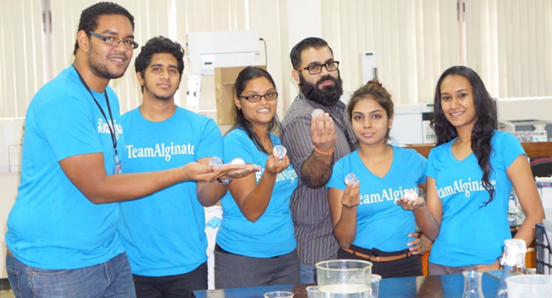
UWI Research Team developing new bioplastic from seaweed. Source: https://uwispace.sta.uwi.edu/items/0bd2268d-4a34-4c98-94c9-fecc34a9d963
Biochar
Biochar is a type of charcoal produced by heating organic materials, like wood or crop residue, in a low oxygen environment. The result of this process is a product that can be used in agriculture and home gardens to improve soil fertility and water retention. To create this product, carbon molecules within the waste are essentially locked into the biochar, eliminating its release into the atmosphere.
In 2019, the Caribbean Agricultural Research and Development Institute (CARDI), in collaboration with the University of Guyana, has conducted feasibility studies to explore the potential of converting coconut waste into biochar as a value-added product. This was based on the rapid growth in Guyana’s coconut industry, with annual production reaching approximately 31,500 tonnes. This has led to a significant increase in waste generation from green coconut shells and coconut husks. When the biochar was activated with water and poultry manure, the results showed positive impacts in amending sandy soils and improving soil quality and integrity. Trial conducted growing hot pepper plants in biochar-amended soil also showed greater survival rates than those of the control group. In fact, the plants grown without biochar saw no survival at all. This study has proven the effectiveness of converting coconut waste into biochar to improve soil quality.
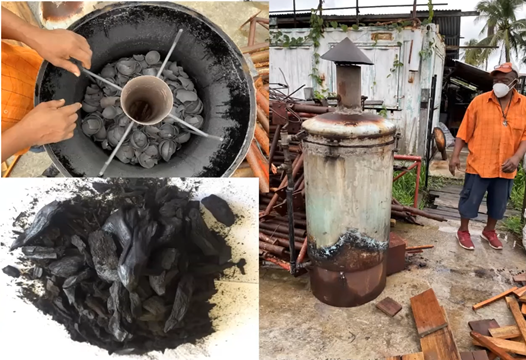
Coconut biochar and the kiln used to create it create it. Source: Retrieved from Jhaman Kundun’s (CARDI Guyana) webinar presentation, January 13th, 2022, https://www.youtube.com/watch?v=ub6R8M4UWbc
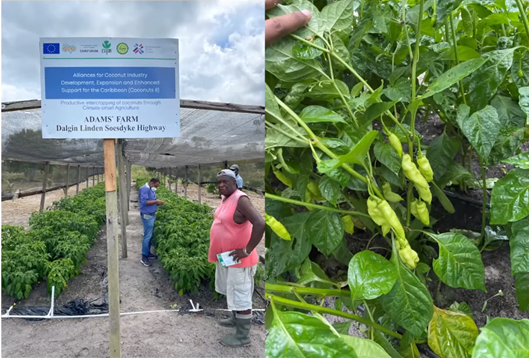
Plants grown in biochar amended soils within the study. Source: Retrieved from Jhaman Kundun’s (CARDI Guyana) webinar presentation, January 13th, 2022, https://www.youtube.com/watch?v=ub6R8M4UWbc
Changing Public Perceptions on Waste
Changing public perceptions is central to improving waste management outcomes. While global attitudes have shifted toward reducing, reusing and recycling (3Rs), progress in the Caribbean has been slower. Many people still see their role as simply putting waste out for collection, unaware of the complex and costly processes that follow. In T&T, the fact that waste services aren’t paid for explicitly, unlike water or electricity, may contribute to this disconnect. Without a clear sense of ownership, citizens may not see themselves as part of the system or recognize how their choices impact public budgets and environmental health.
Behavioural research shows that people are more likely to adopt sustainable habits when they understand the personal and collective benefits. If the public were more aware of how waste management costs affect local government spending, and how simple action like composting or separating their waste could reduce those costs, they’d be more inclined to act.
To support this, targeted education and awareness campaigns on the impacts of waste on our health and environment are essential. One promising example is Dominica’s 3R Awareness Programme introduced in schools. Through modular training, the programme focused on educating students about proper waste management. The programme encourages students to share their learnings at home, creating a spillover effect across families and communities. Engaging parents in the process helped reinforce the message and build support for household-level change. Adapting this kind of approach to include biowaste education, emphasising its potential for composting, agricultural use, or energy generation, could help reposition biowaste as a resource. When people understand the value of what they throw away, they are more likely to become active participants in a cleaner, more resilient future.
IICA: Supporting the Biowaste management thrust
The IICA Delegation in Trinidad and Tobago is currently coordinating a national biowaste working group to develop a pilot initiative to shape a comprehensive national biowaste management strategy. The aim is to transform waste into value while advancing environmental resilience and social equity within an overall National Biowaste Strategic Framework. Key initial components of the strategy will include Biowaste:
- Prevention: Public education and awareness campaigns will highlight the environmental impacts of waste and promote practical tools for reducing individual waste generation, such as meal planning, food purchase strategies, and conscious consumption.
- Reduction: Surplus food from vendors, groceries, and other sources will be redirected to shelters or offered at discounted prices. This initiative addresses both food insecurity and landfill diversion, creating a win-win for communities and the environment.
- Management: with a focus on existing waste through support to biowaste recycling, composting, and upcycling, including innovative approaches like Black Soldier Fly rearing. It promotes both centralized composting systems and household-level practices, while encouraging entrepreneurship and the development of value-added products.
The ultimate goal is to use insights from these initiatives and expertise across agriculture, waste management, and environmental policy to refine the strategy for consideration of Parliament to lay the groundwork for a circular economy that is locally rooted and nationally scaled.
|
National Biowaste Working Group |
|
|
Sian Cuffy-Young, |
Siel Environmental Services Ltd |
|
Sayeed Ali, |
Close the Loop Caribbean |
|
Hamlyn Holder, |
Cube Root Farms Ltd |
|
Nikita Llegal, |
Ah-Grow Ltd |
|
Sheldon Bidaisee, |
College of Science Technology and Applied Arts of Trinidad and Tobago (COSTATT) |
|
Richard Hector, |
Solid Waste Management Company Limited (SWMCOL) |
|
Shurdel Garcia, |
Ministry of Agriculture and Fisheries - Sugarcane Feeds Centre (SFC) |
|
Richard Rampersaud, |
Inter-American Institute on Cooperation for Agriculture Delegation in Trinidad and Tobago |
Call to Action
As Caribbean nations confront accelerating weather unpredictability and adverse changes in climate and the high and rising reliance in imported goods which act as pathways for introduction of both organic and inorganic waste, we must urgently rethink our relationship with waste. By embedding biowaste valorisation into a broader circular economy framework, we can unlock pathways to resilience, self-sustaining agriculture, and robust economic diversity. Realising this potential requires a holistic approach. One which redefines waste as a resource, integrates environmental education, and drives behaviour change whiles catalysing economic opportunities. This transformation hinges on four key pillars:
- Public education is needed to build awareness of waste and the adverse impacts of poor waste management, and to promote practical tools to reduce organic footprints
- Communities need to take direct responsibility for decentralising waste management efforts
- Businesses need to capitalise on biowaste solutions, realising the economic opportunities of value-added products
- Waste management policy and regulation need to be strengthened to support this transformation and affect long-term sustainability
By decentralising waste systems and empowering communities to reduce their organic footprint, local initiatives can restore soil health and reclaim environmental agency. When paired with innovations in research and technology, this integrated strategy positions waste reduction and valorisation as foundational to resilient communities and countries.
About the authors
- Kaila Clarke-Mendes, IICA AgroTalent 2025 Intern.
- Richard Rampersaud, IICA-TT National Specialist, Agribusiness and Value Chains, Intern Supervisor.
- Diana Francis, Representative, IICA-TT and Editor.
BlogIICA Editorial Committee
- Joaquín Arias Segura, Coordinator of OPSAA, IICA.
- Eugenia Salazar, Economist, OPSA, IICA
Note: The opinions expressed in this blog are those of the authors and do not necessarily reflect the views of IICA or its member countries.
Add new comment